ISSCA Logo

Livestock Master Plan (LMP) developed by ILRI for the Indian states of Odisha and Bihar

Solution Overview

The Livestock Master Plan (LMP) provides a strategic investment roadmap for sustainable growth and modernization of the livestock sector based on scientific evidence and data-driven analysis. It provides a comprehensive pathway to enhance livestock productivity, strengthen value-chain, and improve the livelihoods of small-holder farmers through sustainable and climate resilient approaches.  By synthesizing herd modelling with socioeconomic forecasting, the LMP enable governments prioritize investments, promote private sector engagement, and that helps to accelerate inclusive growth in the animal husbandry sector.  
What We Do

Key Features & Benefits

Three-Part Analytical Framework: Combines a baseline Livestock Sector Analysis (LSA), a long-term (15-year) strategic forecast, and a 5-year actionable investment plan.

  • Commodity Value Chain Roadmaps: Prioritizing key livestock value chains such as dairy (cows/buffalos), small ruminants (goats/sheep), backyard poultry, and piggery based on state-specific strengths and resources.
  • Ex-Ante Predictive Modeling: Employs quantitative tools to estimate the return on return on investment (ROI) of combined technological (genetics, animal health, feed) and policy interventions.
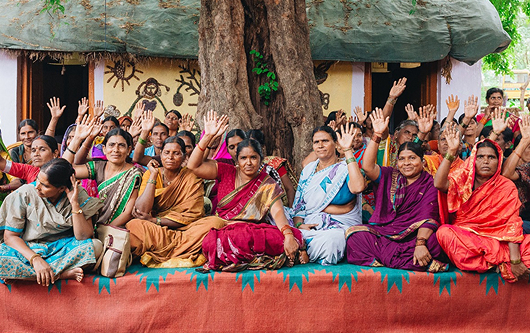
  • Pro-Poor and Gender-Equitable Lens: Specifically factors in how targeted sector adjustments can empower rural women, landless households, and marginalized youth engaged in livestock activities such as goat rearing and backyard poultry.

Catalytic Investment Roadmap: Provides an empirical based platform to mobilize private sector and international funding, strengthen public-private partnerships (PPP), and align with state agricultural development strategies.

Where It Works and Where It Can Work

  • Bihar State (Launched 2018): Pioneered as a subnational LMP in India, focusing heavily on upgrading its massive 32.5 million livestock population, prioritizing the native Black Bengal goat value chain (meat export potential) and the smallholder dairy ecosystem.
  • Odisha State (Launched 2022): Developed for its highly diverse agricultural landscape where over 80% of rural households own livestock. It targets coastal plain, north-west and, hilly and mountain agroecologies, supporting livelihoods where animal husbandry generates up to 30% of average farm incomes. 
  • Potential Application: The underlying modeling tools can be replicated by ILRI across other livestock-dependent, states in India , such as  Andhra Pradesh, Uttar Pradesh, Madhya Pradesh)as well as other countries across South Asia.

Evidence & Impact


In Bihar, the LMP directly supported the baseline architecture for the $146 million "Bihar Aquaculture and Livestock Improvement (BAaLI)" project, backed by the International Fund for Agricultural Development (IFAD). In Odisha, it contributed to the formulation of the multi-million-dollar plan “Kamdhenu” aimed at improving the livestock productivity and milk production.  

  • Productivity & Production Projections: Engineered to safely guide production output increases to match the booming localized demand for milk, eggs, and chicken meat over a 5-to-15-year horizon.
  • Gender and Social Upliftment: Tailored interventions in small ruminants and poultry have actively created a structural bridge for women's financial independence, driving income growth directly into household food budgets.


Scalability & Adoption Support


Global, Adaptable Framework: The LMP framework is highly scalable and has been successfully deployed by ILRI internationally (e.g., Ethiopia, Tanzania, Rwanda, Mangolia Uzbekistan) before being tailored down to Indian state levels.

  • Partner-Ready & Institutional Capacity: Implemented in close collaboration with government officials to ensure local ownership, while strengthening the capacity of veterinary and livestock departments through training on herd and sector-level economic modeling.
  • Requirements for Adoption: Scaling to new states requires dedicated funding support from development organizations, availability of localized livestock baseline data (herd sizes, disease metrics, feeding types), and strong political alignment with state animal development departments and ministries.


Contact Information & Partners

Download PDF

Key Contacts:

  • Dr. Ram Pratim Deka (Senior Research Management Coordinator and Country Representative for India, ILRI) — Email: r.deka@cgiar.org  
  • Dr. Sirak Bahta (Senior Scientist - Agricultural Economist, ILRI) – Email: S.Bahta@cgiar.org  
  • Dr. Braja Bandhu Swain (Research Project Coordinator, India) — Connection via ILRI South Asia. – Email: B.Swain@cgiar.org

Involved Institutions & Funding Partners:

  • International Livestock Research Institute (ILRI)
  • Animal & Fisheries Resources Department (AFRD), Government of Bihar
  • Fisheries and Animal Resources Development Department (FARD), Government of Odisha
  • Bill & Melinda Gates Foundation (BMGF) (Core Project Funder)
  • Samagra Governance (Implementation & Consulting Partner in Odisha)

Related Resources